用对介词聊"道歉",让母语者感受到你的真诚与情商
(本文解决:中文母语者道歉时把 sorry to / sorry for / sorry about 混为一谈的表达瓶颈)
你有没有遇到过这种尴尬:看到同事脸色不好想安慰,却脱口而出 "I'm sorry for the delay.",结果对方以为是你把事情搞砸了?或者开会想插句话说 "Sorry for interrupting",对方却觉得你已经打扰完了?在母语者的脑海里,这三者代表着完全不同的时间维度和责任归属。
你是不是也有这些困惑:sorry to 和 sorry for 有什么区别?sorry for 和 sorry about 有什么区别?sorry about 是什么意思?英语道歉只会说 I'm sorry 怎么办?职场里怎么道歉才专业?在欧美该不该频繁道歉?如果你想摆脱生硬的教科书式道歉,这篇就是你的答案。
✍️ 本文由 Aice 英语学习团队编写 · 上海氦铂网络科技有限公司 · 2026-10-08 · 适合 CEFR A2–B2 水平学习者
🎯 核心干货:三大 "Sorry" 的底层逻辑解析
同样是道歉,sorry to、sorry for、sorry about 后面接的词不同,表达的"时间"和"责任"也完全不同。下面这张对比图帮你一眼看懂三者的区别。
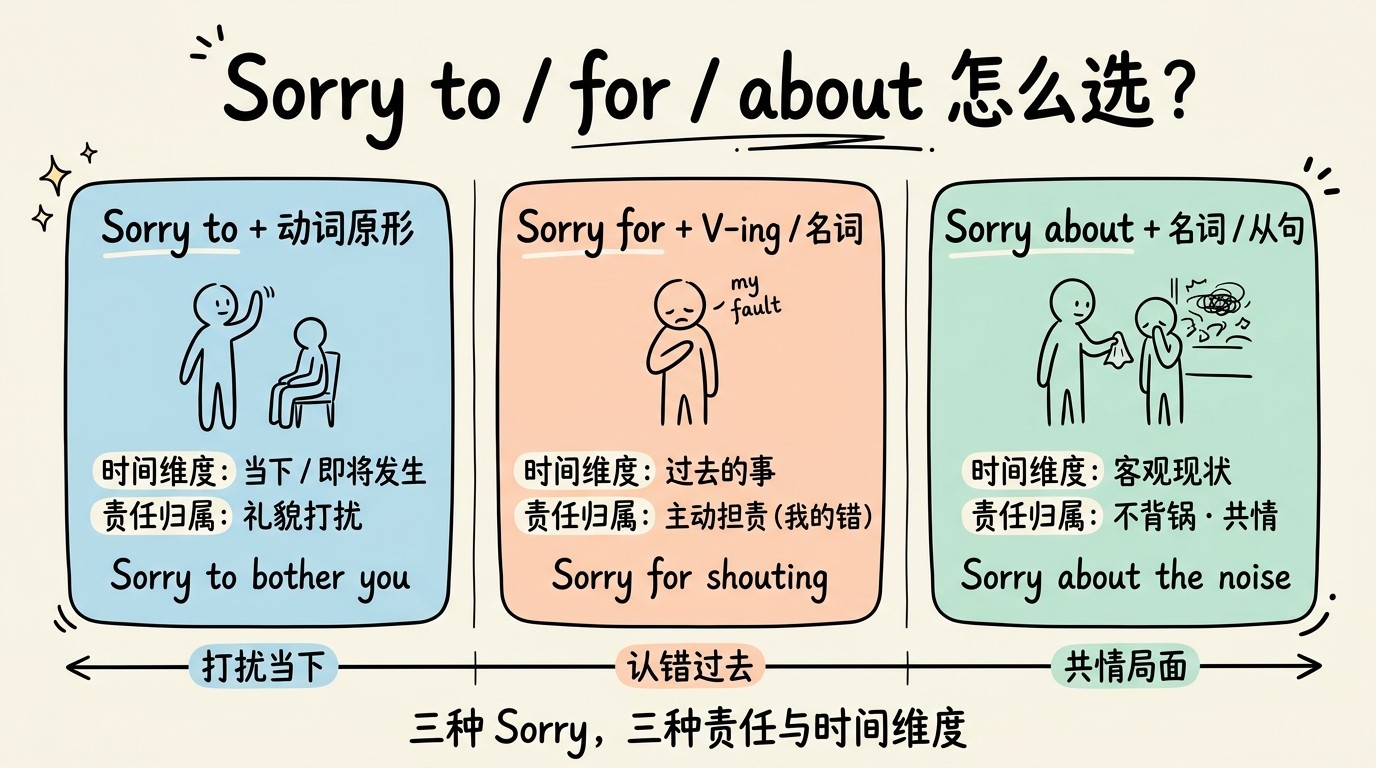
1. Sorry to + 动词原形 ⏳
🔑 当下(现在/即将发生)· 礼貌打扰或传达遗憾当你正在做某件事,或者在做出某个动作的"前一秒",用来表示礼貌的歉意;在正式或职场书信中,也用来引出令人遗憾的信息。
🌰 Sorry to bother you, but is this seat free?
(抱歉打扰一下,请问这个座位有人吗?)
🌰 I'm sorry to interrupt, but I have to go.
(抱歉打断一下,我得先走了。)
🌰 We are sorry to inform you that your application was not successful.
(我们很遗憾地通知您,您的申请未通过。)
2. Sorry for + 动名词/名词 🙋
🔑 针对过去的事 · 明确承认"这是我的错"当你为过去已经发生的事道歉,并且明确表示"这是我的责任、是我不好"(It's my fault / I'm to blame)时,必须用 Sorry for。
🌰 I'm sorry for shouting at you earlier; it was my fault.
(很抱歉刚才对你吼叫,是我不好。)
🌰 I'm sorry for overreacting to your feedback yesterday.
(我很抱歉昨天对你的反馈反应过激了。)
🌰 I'm sorry for what I said—I didn't mean to hurt you.
(我为我之前说的话道歉,我不是故意伤害你的。)
3. Sorry about + 名词/从句 🤝
🔑 客观陈述局面 · 表达共情但不背锅这招在高情商社交中最关键!当你只是确认并提及一个让人不爽的现状,但这件事并不是由你的过错引起的时,用 Sorry about。
🌰 I'm sorry about the noise; there's a lot of building work going on.
(抱歉噪音太大了;这附近正施工呢。——噪音不是我造成的。)
🌰 Sorry about the mess, the painters haven't finished yet.
(家里这么乱真不好意思,粉刷工还没收工。)
🌰 I'm so sorry about what happened to your friend.
(听到你朋友的不幸遭遇,我感到非常难过。)
🎬 想看更直观的视频讲解?点击观看道歉表达教学视频:
📺 Sorry to / for / about 视频讲解💡 避坑指南(Chinglish Mistakes to Avoid)
最常见的坑:把"安慰别人"说成"自己认错"。
❌ "I'm sorry for what happened to you."
别人遭遇不幸,错不在你,用 sorry about 表达共情才得体:
✅ "I'm so sorry about what happened to you."
记住口诀:自己的锅用 for,不是自己的锅用 about,当下打扰用 to。
🧭 一句话记忆法(Quick Memory Hook)
Sorry to → 时间指向当下/即将,后接动词原形。
Sorry to interrupt =「我现在正要打断」
Sorry for → 时间指向过去,责任在我,后接动名词。
Sorry for interrupting =「为我刚才的打断道歉」
Sorry about → 共情某个局面,责任不在我,后接名词/从句。
Sorry about the delay =「堵车让人不爽,但不是我的错」
🔥 地道口语弹药库:母语者常用的 6 个神仙表达
想摆脱平庸的教科书英语?以下 6 个与"道歉、失误、弥补"紧密相关的高阶地道表达,建议立刻收藏进你的词汇库:
🏆 黄金实战公式(Bonus!)
适用场景:职场高情商沟通 / 雅思口语 Part 3 / 商务邮件道歉与补救。当你需要针对工作失误进行诚恳且专业的沟通时,单纯说 "I'm sorry" 会显得苍白无力,甚至降低专业度。用这个公式,既能诚恳认错,又能展现行动力。
🌟 示范回答
"I'm really sorry for dropping the ball on the project deadline yesterday. I also realize I may have stepped on your toes during the review meeting when I cut in, and it was completely my fault for overreacting. I've already reached out to the client to smooth things over, and I'll send over the revised proposal by 3 PM today to make amends."
📝 中文翻译:"关于昨天项目截止日期'掉链子'的事,我非常抱歉。我也意识到在评审会上插嘴可能越权冒犯了你,昨天的过激反应完全是我的问题。我已经主动联系客户沟通以平息局面,并会在今天下午3点前把修改后的方案发给你,以弥补这次过失。"
💡 公式解析:
· 第一层(情感与定性):用 sorry for + 动名词 结合 drop the ball,开门见山承认这是过去的自身过失,不推诿、不找借口。
· 第二层(细节觉察):借用 stepped on your toes 和 cut in,精准点出让人不适的具体行为,体现敏锐的情商与同理心。
· 第三层(解决方案闭环):通过 smooth things over 与 make amends 引出具体时间节点(3 PM)和行动结果,把负面情绪瞬间转化为职业可靠度。
🚀 高阶认知拓展:跨文化沟通中的"不道歉法则"
很多留学生和职场新人常犯一个致命错误:把所有感谢都变成道歉。在欧美职场文化中,过度频繁的无意义道歉会显得你不够自信、缺乏气场。试试把带有负罪感的道歉,替换成积极正向的感谢(Appreciation):
| 低情商 / 过分道歉 ❌ | 高情商地道替换 ✅ | 心理效果对比 |
|---|---|---|
| Sorry for being late. | Thank you for waiting for me. | 将对方的"被动等待"转化为"美德被认可" |
| Sorry for the long email. | Thank you for taking the time to read this. | 减少自我否定,凸显对方付出的价值 |
| Sorry for talking so much. | Thank you for listening to my thoughts. | 建立双向倾听的亲密信任感 |
🧩 来个小测试,看看你掌握了没有
开会时你想插句话打断发言者,以下哪种表达最地道?
A. "Sorry for interrupting." B. "Sorry to interrupt." C. "Sorry about interrupting."
✅ 答案:B — "Sorry to interrupt." 你正要打断(动作在当下/即将发生),用 sorry to。A 的 sorry for interrupting 是打断完之后才道歉。
你昨天对同事发了脾气,想诚恳认错,哪种说法最到位?
A. "I'm sorry to shout at you." B. "I'm sorry about shouting." C. "I'm sorry for shouting at you; it was my fault."
✅ 答案:C — "I'm sorry for shouting at you; it was my fault." 这是过去的事且责任在你,必须用 sorry for + 动名词,明确担责。
朋友的宠物去世了,你想表达慰问,哪种最得体?
A. "I'm sorry for what happened to your pet." B. "I'm so sorry about your pet." C. "I'm sorry to your pet."
✅ 答案:B — "I'm so sorry about your pet." 这不是你的错,纯粹是共情慰问,用 sorry about。A 会让人误以为是你造成的。
职场里把一份报告搞砸了,想专业地认错,哪个地道表达最合适?
A. "I made a small mistake." B. "I dropped the ball on this report." C. "I lost the report."
✅ 答案:B — "I dropped the ball on this report." drop the ball 专指因自己疏忽而失职,是母语者承认失误的高频地道表达。
✨ 简单小结
| 表达 / 词汇 | 意思 | 语感 / 场景 |
|---|---|---|
| sorry to + 动词原形 | 礼貌打扰 / 传达遗憾 | 当下或即将发生的动作 |
| sorry for + 动名词 | 为过去的事担责 | 这是我的错 / my fault |
| sorry about + 名词 | 共情 / 遗憾 | 不是我的错,不背锅 |
| drop the ball | 掉链子,失职 | 承认任务疏忽 |
| cut in | 插话,插嘴 | 会议中想补充观点 |
| own up to | 坦白认错 | 不甩锅,敢担当 |
| smooth things over | 平息事端,调解 | 冲突后缓和气氛 |
| step on someone's toes | 越权冒犯 | 无意介入他人职责 |
| make amends | 赔罪,弥补过失 | 用行动给出补偿 |
分清这三种 sorry 搭配,下次道歉时你的英语会让母语者感受到真诚与情商!💪
收藏这篇指南,别再让得体的道歉止步于一句苍白的 "I'm sorry"!🌟
对于中文母语的英语学习者,道歉的核心障碍不是词汇量,而是不知道介词背后的时间维度与责任归属。记住:当下打扰用 sorry to,自己的锅用 sorry for,共情不背锅用 sorry about;再搭配 drop the ball、own up to、smooth things over、make amends 等地道表达和"精准道歉+坦诚担责+主动补救"的实战公式,你的道歉就能既诚恳又专业。
常见问题解答
Q: sorry to 是什么意思?什么时候用?
一句话答案:sorry to + 动词原形,核心是"在当下或即将发生的动作中礼貌打扰、传达遗憾"。例如:Sorry to bother you, but is this seat free?(抱歉打扰一下,这个座位有人吗?)
Q: sorry for 是什么意思?什么时候用?
一句话答案:sorry for + 动名词/名词,核心是"为过去已发生的事道歉并承认是我的错"。例如:I'm sorry for shouting at you earlier; it was my fault.(很抱歉刚才对你吼叫,是我不好。)
Q: sorry about 是什么意思?什么时候用?
一句话答案:sorry about + 名词/从句,核心是"客观陈述让人不爽的局面、表达共情但不背锅"。例如:I'm so sorry about what happened to your friend.(听到你朋友的遭遇,我很难过。)
Q: sorry for 和 sorry about 有什么区别?
一句话答案:区别在责任归属。sorry for 表示"这是我的错、主动担责";sorry about 表示"我共情或遗憾,但这件事不是我造成的"。
Q: sorry to 和 sorry for 有什么区别?
一句话答案:时间维度不同。Sorry to interrupt 指"我现在正要打断"(当下);Sorry for interrupting 指"为我刚才的打断道歉"(过去)。
Q: drop the ball 是什么意思?
一句话答案:drop the ball 意为"掉链子、失职",职场中承认任务因自己疏忽没做好。例如:I totally dropped the ball on this report.(这份报告我完全掉链子了。)
Q: own up to 是什么意思?
一句话答案:own up to (something) 意为"坦白认错、主动担责",形容人不甩锅。例如:At least he owned up to his mistake.(至少他坦白承认了失误。)
Q: make amends 是什么意思?
一句话答案:make amends 意为"赔罪、弥补过失",指犯错后用实际行动补偿。例如:I'm ready to do whatever it takes to make amends.(我愿意做任何事来弥补。)
Q: 英语道歉只会说 I'm sorry 怎么办?
一句话答案:先分清三种搭配——礼貌打扰用 sorry to、主动担责用 sorry for、共情不背锅用 sorry about;再搭配 drop the ball、own up to、make amends 等地道表达和"精准道歉+坦诚担责+主动补救"公式。
Q: 在欧美职场该不该频繁道歉?
一句话答案:不建议过度道歉,会显得不自信。可把道歉换成感谢:Sorry for being late → Thank you for waiting for me;Sorry for the long email → Thank you for taking the time to read this。
📖 本文适用场景:雅思口语 Part 3 关于"道歉/人际沟通"话题备考、商务邮件道歉与补救、职场高情商沟通、与外国同事和朋友表达歉意或慰问、想替换生硬的 I'm sorry 的中文母语英语学习者、想弄清 sorry to / sorry for / sorry about 用法区别的学习者。